Is Pitti Palace Worth Visiting?! Here’s My Consensus!

***Please note that this Is Pitti Palace Worth Visiting?! Here’s My Consensus! Guide will be updated and recirculated periodically to reflect the most up-to-date dining scene. This travel guide was most recently updated as of August 2026.***

You’re here and you’re probably planning a trip to Florence, Italy (look no further than here for my itinerary!). Anddd, you’re also wondering is Pitti Palace worth visiting?! This guide will explore whether or not this palace is worth a visit and my own consensus!

*Disclaimer: Please note that this post contains affiliate links, which means that if you purchase through one of my links, then I will receive a small commission. This commission is at no extra cost to you. Additionally, this post is not sponsored, and all opinions are my own. Thank you for supporting The Pink Chickadee.*

For more travel abroad inspiration, check out my exploring 50 Countries Expedition page and ultimate Europe packing list.

Is Pitti Palace Worth Visiting?! Here’s My Consensus!

If you’re traveling to Italy anytime soon, then look no further than my Florence 7-day itinerary, Galleria Colonna Rome reviewDuomo di Siena guideFlorence Duomo Climb guidePapal Audience guideRome 7-day itinerary, and things to do in Rome guide

Is Pitti Palace Worth Visiting?! Here's My Consensus!

Table of Contents

About Pitti Palace

Getting There

Tickets to Pitti Palace

Know Before You Go

Is Pitti Palace Worth Visiting?!

About Pitti Palace

the Artichoke Fountain

Also known as Palazzo Pitti in Italian, Pitti Palace is a Renaissance architectural palace and became a symbol of the Medici family’s power over Tuscany. Pitti Palace was first purchased in 1550 by Cosimo I de’Medici and his wife Eleanor of Toledo as the new Grand Ducal residence. Alongside the Medici family dynasty, Pitti Palace also housed the court of the House of Habsburg-Lorraine (who succeeded the Medici family in 1737) and the Kings of Italy from the House of Savoy (who inhibited it from 1865). Nevertheless, the palace’s namesake honors its first owner: the Florentine banker Luca Pitti who started its construction in the mid-1400’s.

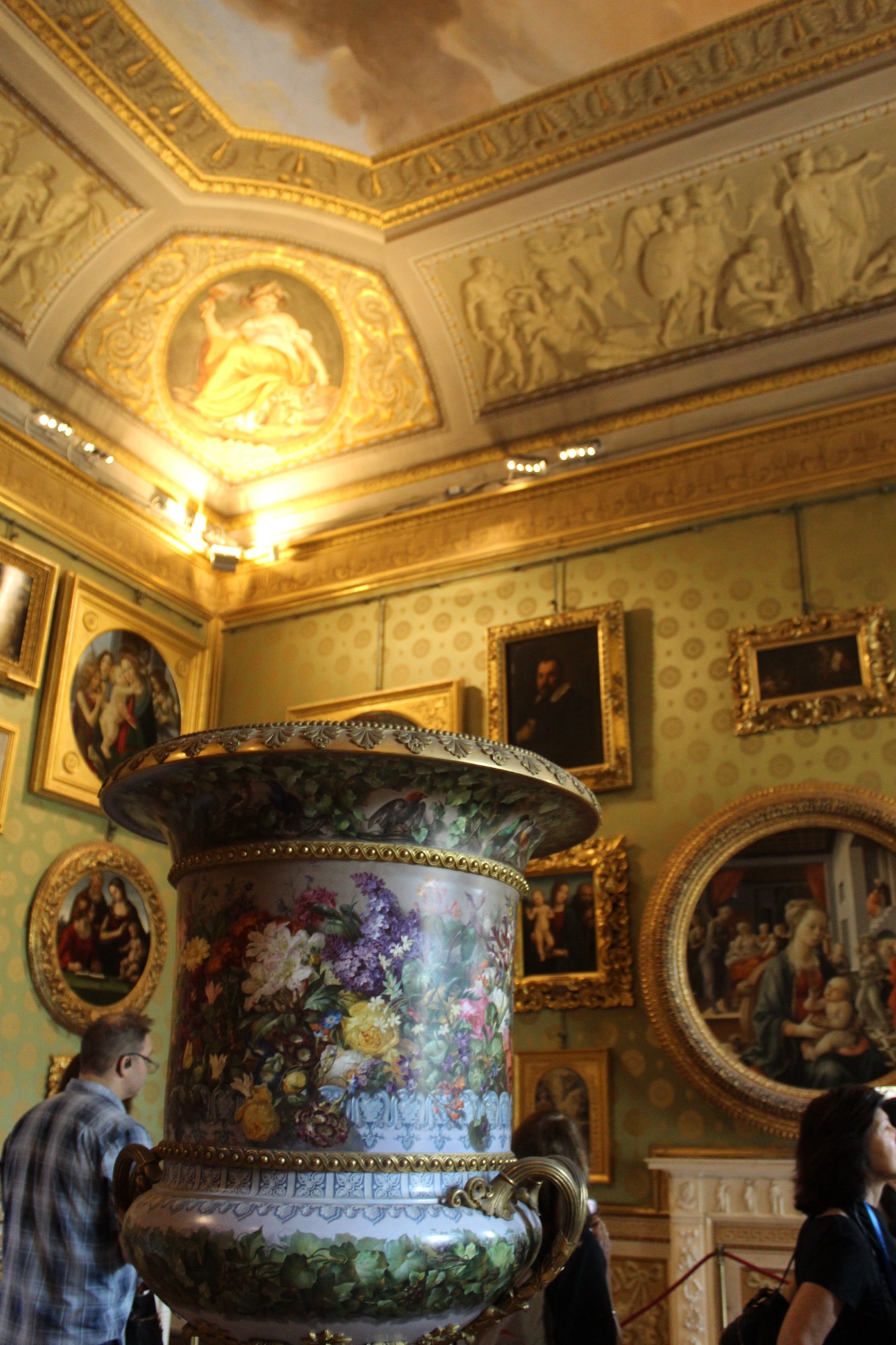
Today, alongside its adjacent magnificent Boboli Gardens, Pitti Palace houses 5 museums: 

  • Treasury of the Grand Dukes
  • The Museum of Russian Icons
  • The Palatine Gallery
  • The Imperial and Royal Apartments 
  • The Gallery of Modern Art and the Museum of Costume and Fashion

For more information on Pitti Palace and its museums, collection of artworks, and history, look no further than here.

Getting There

Pitti Palace is located near the foot of Ponte Vecchio just across the Arno River and is an easy walk from there. There are a few options for getting there:

  • Walking – From City Center, cross the Arno River using the famous Ponte Vecchio and Continue straight onto Via de’ Guicciardini for a few minutes until you reach Piazza de’ Pitti
  • By Bus – Take local bus lines C4, 11, 36, or C3 to the Pitti stop on Via de’ Guicciardini
  • By Tram – Take the T1 line and exit at the UnitĂ  stop, then walk about 10–12 minutes south
  • By Taxi/Rideshare – Direct your driver to “Palazzo Pitti” (this is what I did!)

classic European style garden

Tickets to Pitti Palace

It is recommended for the most affordable option to book tickets to Pitti Palace using their website. Personally, I suggest booking a Combined Pitti + Boboli Gardens ticket, as the gardens are truly magnificent on their own!

However, for a useful way to book tickets to multiple sites within Florence (and beyond!), then I highly recommend using GetYourGuide – an app where all of your bookings including to Pitti Palace will show up in one central location. Book your tickets on GetYourGuide here.

Book your tickets to Pitti Palace and Boboli Gardens here.

Know Before You Go

Before you embark on your Pitti Palace experience, here are a few things you should know before you go:

  • Since Pitti Palace is not a cathedral, a strict dress code of covering your shoulders and knees is not strictly enforced. However, if visiting other cathedrals (including The Vatican) in Rome throughout the day, then I would highly suggest coming prepared dress code-wise.
  • Cameras are allowed, however, flash photography is prohibited.
  • Upon entering the Pitti Palace, guests will have to go through a bag security checkpoint. Please refer to the Visit Page for more information on bags allowed and luggage storage options onsite.
  • If you booked a timed entry experience, Pitti Palace is a timed experience, but typically visitors can still enter on the day that they booked for – be sure to arrive at least 10-15 minutes before your timed the entry slot.
  • Take a moment to savor this incredible palace and gallery and all of its masterpieces within it! Truly, Pitti Palace’s museums and Boboli Gardens are a magnificent work of art like no other!!
  • Personally, I would budget 2-4 hours at Pitti Palace and Boboli Gardens when visiting. It is SO easy to get lost in the museums and gardens and you’ll want to maximize your time there. Truly, you won’t want to miss anything!!
  • Wear comfortable, suitable shoes for uphill climbing on marble staircases and in the gardens – which are present through parts of the palace. In fact, I have a guide on comfortable + stylish flats for travel if you need any inspiration! 

For more further information on visiting Pitti Palace including information on Accessibility and group visits, then look no further than its FAQ Page.

Is Pitti Palace Worth Visiting?!

YES!!!!

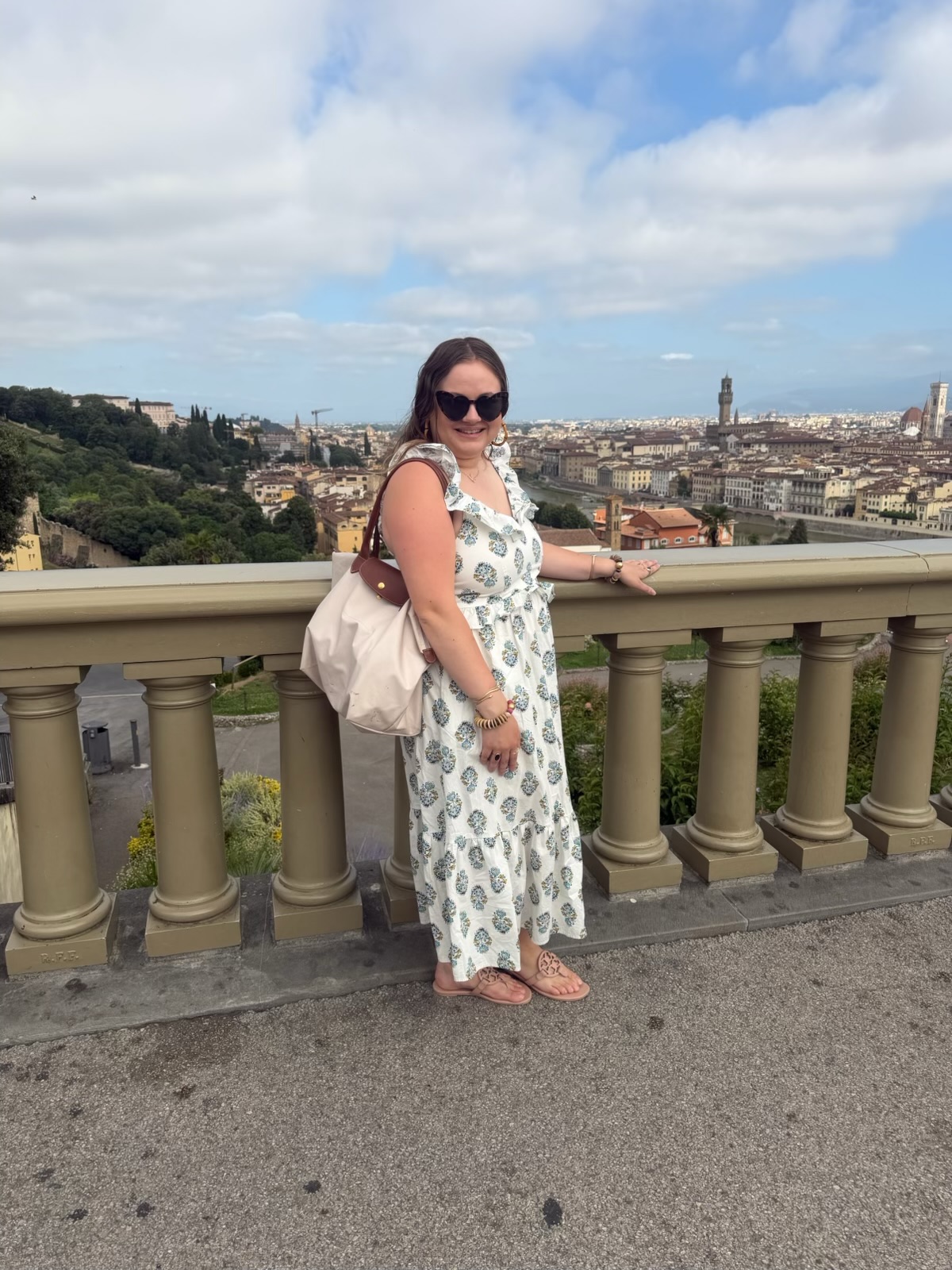
Personally, Pitti Palace is 100000% worth visiting! I found myself spending 3-4 hours wondering about the palace grounds and its vast gardens. The exhibitions within Pitti Palace’s 5 distinct museums and the gardens make it definitely worth a visit. Another aspect of visiting this palace and gardens is that they are truly a breath of fresh air from the crowds of visitors within Florence, especially at museums and sites like the Uffizi Gallery (however, I highly recommend visiting that too!). Not to mention, Boboli Gardens offers several incredible skyline views of Florence (and Tuscany!). 

Wrap-Up

Is Pitti Palace Worth Visiting?

If you’re wondering: is Pitti Palace worth visiting?! The answer is a resounding yes! Truly, this palace and its adjacent gardens are so magnificent, you’ll want to plan another visit after spending hours there!

XOXO – Katie <3 

One Week In Florence, Italy?! Here’s Your Perfect Itinerary!

***Please note that this One Week in Florence, Italy?! Here’s Your Perfect Itinerary! Travel Guide will be updated and recirculated periodically to reflect the most up-to-date information. This list was most recently updated as of August 2026.***

Planning one week in Florence, Italy?! This city that was at the heart of the Renaissance; truly has it all both in the city and in the nearby Tuscan countryside. This one week in Florence itinerary provides you with the perfect balance of city time, rest, and Tuscany countryside adventures. 

*Disclaimer: Please note that this post contains affiliate links, which means that if you purchase through one of my links, then I will receive a small commission. This commission is at no extra cost to you. Additionally, this post is not sponsored, and all opinions are my own.*

For more travel abroad inspiration, check out my exploring 50 Countries Expedition page and ultimate Europe packing list.

One Week in Florence, Italy?! Here’s Your Perfect Itinerary!

If you’re traveling to Italy anytime soon, then look no further than my is Pitti Palace worth visiting guide, Galleria Colonna Rome review, Duomo di Siena guideFlorence Duomo Climb guidePapal Audience guideRome 7-day itinerary, and things to do in Rome guide

One Week in Florence, Italy?! Here’s Your Perfect Itinerary!

Table of Contents 

Know Before You Go

Your One Week in Florence, Italy Itinerary

Know Before You Go

posing with a drink next to the famous wine window

Before visiting the heart of the Italian Renaissance, I highly recommend keeping the following in mind before you go:

  • The common currency in Florence (and all of Italy!) is the Euro. Credit cards are widely accepted, but be sure to double-check that your card doesn’t have a transaction fee when paying in a different currency.
  • If you do opt to withdraw cash from an ATM, for your utmost safety and to avoid scams, only use ATMs at a bank.
  • Upon arrival at Florence airport or Florence’s train station, there will be a taxi line to grab a taxi. I highly recommend using the taxi line upon arrival in Florence. It will be the easiest and most convenient way to get around the city.
  • Be sure to download a local taxi app before you go, as Ubers are not plentiful. I used appTaxi.
  • Uber Black is the primary Uber option for rideshare within Rome unless you download a local taxi app, which I primarily used throughout my trip. Uber Black is pricey, which is why I only used it when I couldn’t find a taxi one night. 
  • Compare fares both on key sites of interest websites as well as third-party sites like GetYourGuide â€“ sometimes it’s cheaper on the key sight’s website as opposed to GetYourGuide. The benefits of GetYourGuide is that all of your tickets will be in one key place.
  • For tips and tricks on packing for one week in Florence, I recommend checking out this resource on what to pack. 
  • And, most importantly, HAVE FUN!

Palazzo Pitti and Boboli Gardens in Florence, Italy

Your One Week in Florence, Italy Itinerary

While I am simply sharing my *very own* itinerary for one week in Florence, Italy, there are several incredible sights to see throughout the city. It is going to be tough to see all that you want to see, which is why I recommend picking the top things you want to see when in Florence. GetYourGuide is an excellent place to get a feel for all that Florence, Italy has to offer.

Basilica of Santa Maria Novella

Day 1 – Arrival Day

  • Land at Florence, Italy’s Amerigo Vespucci Airport (FLR) and grab a taxi in the taxi line to your hotel
  • Check-in to your hotel (I highly recommend staying at the Social Hub Florence Belfiore which has an onsite cafe, rooftop bar, and pool!)
  • Take a nap
  • Get acclimated with Florence, Italy and grab some dinner and a Spritz!

Day 2 – Day Trip in Tuscany

  • Grab some breakfast at a local cafe 
  • Walk from your hotel to Firenze Santa Maria Novella (SMN) train station to catch your train to Siena, Italy. Arrive a bit early to grab a coffee/snacks/sandwiches and check out the onsite bookstore and pharmacy (you won’t regret it!)
  • Board your train to Siena, Italy
  • Arrive in Siena, Italy and take a taxi at the pickup section to downtown Siena (I asked for a Duomo di Siena drop off location!). While in your taxi, be sure to look out the window at the breathtaking Tuscan views!!
  • Grab lunch, check out the local shops, wander the streets, and visit the magnificent Duomo di Siena
  • Grab a taxi back to Siena, Italy train station and board your train back to Firenze Santa Maria Novella (SMN) train station aka the main train station in Florence, as there are multiple train stations in Florence 
  • Arrive in Florence and walk around downtown Florence at golden hour + grab dinner and rest up for the evening

Day 3 – Rest + Sightseeing 

  • Enjoy a restful morning before grabbing coffee + sandwiches at the Florence Social Hub Belfiore’s excellent onsite cafe 
  • Walk around downtown Florence and check out several shops along the way, including leather shops, gourmet food + wine shops, and more 
  • Climb up to the top of the Florence Duomo via a timed-entry ticket
  • Reward yourself after a 460+ step climb up and down with a glass of wine and a sandwich at In Vino Veritas | Vino & Schiacciata
  • Walk around and admire the Duomo from outside, check out local shops, and get lost in the streets of Florence
  • Grab a Spritz at View On Art Rooftop Cocktail Bar – the views are AMAZING and I highly recommend making a reservation
  • Grab dinner and gelato before heading in for the evening 

Day 4 – Rest + Sightseeing 

  • Enjoy another restful morning before grabbing coffee + sandwiches at the Florence Social Hub Belfiore’s excellent onsite cafe 
  • Walk around downtown Florence and check out several shops along the way, including leather shops, gourmet food + wine shops, and more
  • Perhaps, grab a drink at one of the city’s many historic and iconic wine windows 
  • Visit the Ferragamo Museum and explore the Uffizi Gallery
  • Grab a glass of wine at In Vino Veritas | Vino & Schiacciata
  • Freshen up before dinner
  • Grab dinner and gelato before heading in for the evening

Day 5 – Sightseeing

  • Grab a coffee and sandwich at the Florence Social Hub Belfiore’s excellent onsite cafe 
  • Grab a taxi to Pitti Palace and Boboli Gardens 
  • Spend the morning and early afternoon getting lost in the exhibitions, gardens, and all that Pitti Palace and Boboli Gardens has to offer
  • Check out nearby designer shops for excellent discounts and walk to and across the nearby Ponte Vecchio bridge 
  • Grab lunch nearby and head on over to the Gucci Garden (Gucci’s very own museum!)
  • Walk around downtown Florence and check out several shops along the way, including leather shops, gourmet food + wine shops, and more
  • Perhaps, grab a drink at one of the city’s many historic and iconic wine windows 
  • Rest up and freshen up before dinner
  • Grab dinner and gelato before heading in for the evening

Day 6 – Day Trip in Tuscany

  • Grab a coffee and sandwich before heading to your Tuscany wine tour and tasting day trip
  • Enjoy your Tuscany wine tour and tasting day trip (mine went to two wineries in San Gimignano as well as a brief stop in the medieval downtown)
  • Once back into Florence, walk around downtown Florence and check out several shops along the way, including leather shops, gourmet food + wine shops, and more
  • Enjoy your last night in Florence with dinner + catching golden hour at and around the Duomo (it is 10000% worth it!) 
  • Head back to your hotel room to pack and prepare for your travel day

Day 7 – Travel Day

  • Grab a coffee and sandwich at the Florence Social Hub Belfiore’s excellent onsite cafe 
  • Get a transfer, taxi, or rideshare to your next destination (whether it be the airport home, train station, or a transfer elsewhere)

Wrap-Up

One Week in Florence, Italy

Truly, Florence, Italy is my all-time favorite city in Europe!! I have so many special memories made in Florence since I was a kid as it was the first European city I ever visited. Hopefully, your one week in Florence will be such a special and magnificent week for you, too!

XOXO – Katie <3 

I Did The Florence Duomo Climb: Here’s My Take!

***Please note that this I Did The Florence Duomo Climb: Here’s My Take!Guide will be updated and recirculated periodically to reflect the most up-to-date dining scene. This travel guide was most recently updated as of July 2026.***

If you’ve ever been to Florence, Italy, then you know how magnificent its iconic Duomo is! But, did you know that you can climb the Duomo in Florence?! In this blog post, I will outline how to have the utmost experience of the Florence Duomo climb, so that you can experience the most unreal views of Florence (and Tuscany!) and experience the Duomo in such a unique way!

*Disclaimer: Please note that this post contains affiliate links, which means that if you purchase through one of my links, then I will receive a small commission. This commission is at no extra cost to you. Additionally, this post is not sponsored, and all opinions are my own. Thank you for supporting The Pink Chickadee.*

For more travel abroad inspiration, check out my exploring 50 Countries Expedition page and ultimate Europe packing list.

I Did The Florence Duomo Climb: Here’s My Take!

If you’re traveling to Italy anytime soon, then look no further than my Florence 7-day itineraryis Pitti Palace worth visiting guide, Galleria Colonna Rome guide, Siena Cathedral guide, Papal Audience guide, Rome 7-day itinerary, and things to do in Rome guide.

Table of Contents

About The Florence Duomo Clumb

Getting There

Tickets to The Florence Duomo Climb

Know Before You Go

My Experience

About The Florence Duomo Climb

The Florence Duomo climb is located at the Florence Duomo via climbing the cathedral’s dome. Truly, the dome is a masterpiece – a symbol of Renaissance culture, the city of Florence, and of all Western humanism. The dome was constructed between 1420-1436 and was planned by Filippo Brunelleschi, who was able to create it without reinforcements in wood as no one else could construct a cupola of its size (an external diameter of 55 meters and internal diameter of 45.5 meters). To this day, it remains the largest masonry vault in the world. 

The dome has an octagonal structure consisting of stone and brick masonry and actually consists of two domes: one internal and one external each of which is composed of eight “sails”. These two sails support the overall construction of the dome and host a 463-step stairway that visitors can climb up and down when visiting. 

History of Florence Duomo

Formerly known as Santa Maria del Fiore, the Florence Duomo is one of the world’s largest churches and was built during the heart of the Italian Renaissance, which the city of Florence played a big role in. Florence Duomo’s first stone was laid on September 8, 1296 and its construction was tasked to Arnolfo di Cambio but was smaller-than-constructed. In the mid-14th century, the Duomo’s expansion was developed by Francesco Talenti and its completion was consecrated by Pope Eugenio IV on March 25, 1436. 

Today, Florence Duomo remains one of the most magnificent Renaissance structures in the world! Its interiors are set out by immense pillars and Gothic arches alongside inlaid marble mosaic floor decorations by the grand ducal workshops of the 16th-17th centuries. Developed by Florentine artists of the Italian Renaissance, its interiors are also illuminated by 44 stained glass windows. There are several points of interest within Florence Duomo’s grounds and sights to see, alongside the Duomo climb, including:

  • Cathedral
  • Dome
  • Giotto’s Bell Tower
  • Opera Del Duomo Museum
  • Ancient Basicilia of Santa Reparata 
  • Duomo Terraces 

See more information on Florence Duomo here.

Getting There

To get to the Florence Duomo, there are a variety of options, including:

  • Walking – A straight-shot 10-15 minute walk from Santa Maria Novella (SMN) Station via Via dei Cerretani.
  • Bus – City bus lines C1, C2, C3, 6A, 6B, 11, 14, 23, and 23N stop right around the Duomo vicinity.
  • Tram – Line T2 connects Florence Airport (FLR) to the main station area, from which you finish the trip on foot.
  • Car/Taxi – It is worth noting that Florence Duomo is located in a historical center with limited car/taxi access. It is best advised to walk or order a taxi pickup/drop-off a couple of blocks within walking distance or at the Santa Maria Novella (SMN) Train Station via Via dei Cerretani.

Tickets to The Florence Duomo Climb

It is highly advised via the Florence Duomo’s website to only book tickets via their official website. It is also worth noting that online resale by non-authorized third parties is strictly banned, and it’s encouraged that all visitors book through the website’s official channels. 

Book your tickets to the Florence Duomo Climb here.

Know Before You Go

Before you embark on your Florence Duomo climb experience, here are a few things you should know before you go:

  • The walls are narrow throughout most of the 463 steps both up and down the Florence Duomo.
  • There are no elevators within the 463-step experience of climbing up and down the Florence Duomo. Be sure that you are able to handle the experience before going. 
  • Within the 463 steps, there are railings on some points of the journey and some points of the journey, there are not. Personally, when there wasn’t a railing, I held my hands onto the narrow walls, which helped me maintain my balance.
  • There are a few points throughout the climbing experience (both up and down) for folks to stop and take a breather. Two of these breaks give visitors an opportunity to admire the masterpiece that is the paintings on the dome’s interiors.
  • Upon entering the Florence Duomo climb experience, guests will have to go through a bag security checkpoint. Please refer to the FAQ page for more information on bags allowed and luggage storage options onsite.
  • The Florence Duomo climb is a timed experience – be sure to arrive 10-15 minutes at least 10-15 minutes before you timed the entry slot. Each timed entry experience is meticulously scheduled via its group, as groups will have X amount of time to climb up, enjoy the terrace, and then climb down. Above all else, just follow the crowds!
  • Slow and steady wins the race in terms of timing to climb up and down the Duomo, especially for those who don’t do as much uphill climbing. 
  • Wear comfortable, suitable shoes for uphill climbing on marble staircases. In fact, I have a guide on comfortable + stylish flats for travel if you need any inspiration! 

For any more questions and concerns you may have, look no further than the FAQ page.

My Experience

As someone who rarely walks uphill and in fact detests walking uphill, I found the Florence Duomo climb experience to be one of the utmost rewarding experiences of my life! I ended up getting in line early and went through security with my large Le Pilage Longchamp tote bag (in photos for sizing) and didn’t have any issues. Then, we climbed up to the terrace, admiring the dome’s masterpieces along the way.

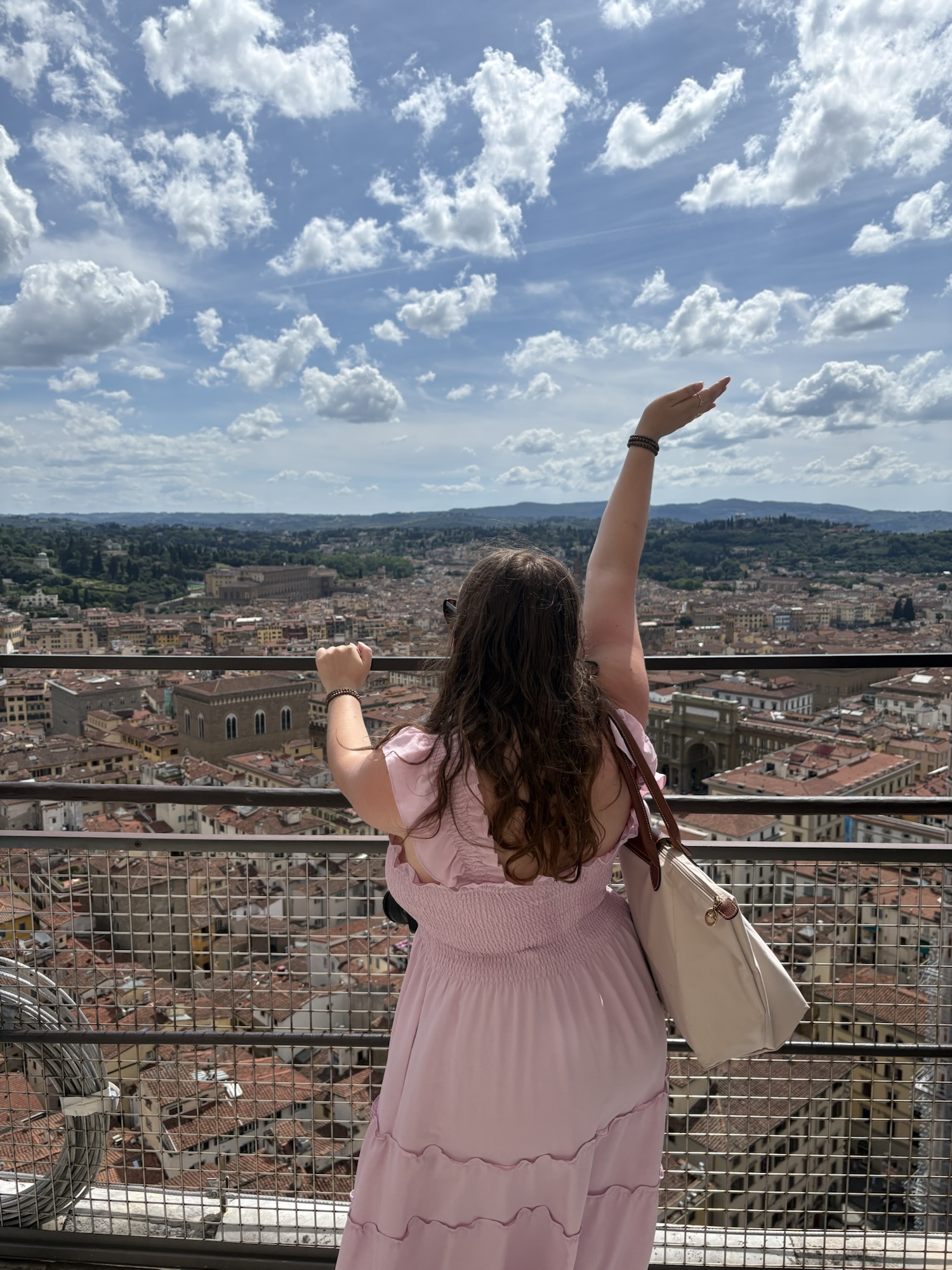
The most rewarding part was … the incredible scenic views of Florence from above! My group and I had about 15-25 minutes at the top of the Florence Duomo to take photos and simply take it all in before the next group. Truly, it was SO rewarding and I’d do it again! In fact, I plan to climb more cathedrals, towers, etc. in the future thanks to my experience climbing the Florence Duomo!!

Wrap-Up

Thinking about climbing the Florence Duomo?!?! Hopefully, my own personal experience as an avid hater of uphill climbing and intense hiking will inspire you otherwise!

XOXO – Katie <3 

I Lived in Tuscany for a Month

Love me some Tuscany!! As highly requested on my Instagram story survey a few weeks ago, many of y’all wanted to hear my experiences studying abroad. I have been lucky enough to study abroad in 3 different cities in 3 different countries: Sansepolcro, Italy (a small town in Tuscany), London, England, United Kingdom, and San Ignacio, Belize (a town in the rainforest region of Belize). Over the next few weeks, I will be sharing my experiences studying abroad in each country, along with some advice that is specific to each place. It is important to note that each of these study abroad programs were done through my school – Meredith College. Today, I will be beginning my sharing of my study abroad experiences by sharing my study abroad experience in the small Italian town of Sansepolcro located in the dreamy region of Tuscany.

The Benefit of Sansepolcro

When most people picture study abroad, they picture college students living in a massive city, such as Florence, Milan, or Rome. The majority of study abroad programs in Italy are, in fact, held in these major cities. Unlike Florence, Milan, and Rome, Sansepolcro is a tiny Italian town located in the hill country of Tuscany. There is not even a train station in the town – the nearest one is an hour away in Arezzo. What Sansepolcro does have that Florence, Milan, and Rome do not have is drop dead gorgeous lush hill country that goes for miles and miles on end along with locals that are extremely friendly. Sansepolcro’s small town charm could not be bought or even found in either Florence, Milan, or Rome.

The special thing about Sansepolcro is Meredith College’s relationship with the town. For decades now, Meredith College has sent their students to study abroad in Sansepolcro on study abroad programs through the school along with trips for alumni. Like myself, Meredith College fell in love with Sansepolcro due to its down to earth and authentic charm, which Italy’s major cities lack. The locals in Sansepolcro and Meredith College students, faculty, staff, and alumni have established a close-knit bond that has lasted throughout the years. This bond is so strong that Meredith College purchased a Palazzo (like an apartment) above a pizza place in the town that its students and faculty live at when they study abroad. Before me, many of my Meredith sisters have lived in Meredith’s Palazzo in Sansepolcro and many more will after me. I have found Meredith’s Palazzo in Sansepolcro to be such a special asset to studying abroad in Italy, as not many students can say that they lived in a small town in Tuscany that their school has maintained such strong connections with.

Living in Meredith’s Palazzo was an experience like no other. The bedrooms were most definitely authentic to the Italian lifestyle – simplistic and beautiful. Not many Italians and Europeans for that matter have their own closets – they have wardrobes instead. Laundry in Italy is only washed and hung to dry. In Italy, the Italians eat lunch as their biggest meal like dinner is in the United States. At Meredith’s Palazzo, we were lucky enough to have a lovely chef named Margarita to cook us our lunch each day. Each day, Margarita made something completely different yet still very Italian and authentic to the Tuscan region. Every single one of Margarita’s meals was AMAZING, and I wish I could enjoy one of her extraordinary creations as I write this!! The Meredith Palazzo lifestyle allowed me to live the life of a Sansepolcro resident, which truly allowed me to experience living in a different country as if I were a local there. You know what they say: when in Sansepolcro!

Courses I Took

One of the most important things about studying abroad is that you are there to STUDY. Meredith’s Office of International Programs staff member Liz ALWAYS emphasizes how study abroad is NOT a trip or vacation as you are there to study. Liz’s emphasis on study abroad as a time to study and learn and grow as an individual in a brand-new culture is extremely important to myself as well. Study abroad is a time for nothing other than self growth while having an educational experience in a brand-new country and culture. Personally, I find this very important to remember. While study abroad is exciting and may feel like a trip/vacation, it is anything BUT that.

While in Sansepolcro, I took three different courses: Arts and Artifacts (a class on the history of Sansepolcro and Italy), Nonverbal Communication, and Yoga. Each of these courses was unique in its own way and provided me with different facets of knowledge that I take with me to this day. Both Arts and Artifacts and Nonverbal Communication were taught by Meredith professors who lived with us at the Palazzo. I definitely saw both of my professors studying abroad with me as my Italy mom’s! Meanwhile, my Yoga instructor was a local to Tuscany who has a popular yoga blog in Italy. I found the value of having classes taught both by Meredith professors and a Tuscan local to be priceless.

In my Arts and Artifacts course, I got to learn about Sansepolcro and Italy while write about what I saw. One distinct thing about the Arts and Artifacts course is that it is taught on every one of Meredith’s study abroad programs with it being unique to each country that it’s taught in. I took this course in both England and Belize as well. In this course, students get to learn about the part of the world that they are studying abroad in while getting to see the places/sights that they are learning about. In Sansepolcro, I learned about the town of drop dead gorgeous medieval Angihari right before I visited it. The same went for the sculpture of David at the Galleria dell’Accademia in Florence, the origin of Murano glass on the island of Murano, and the Duomo di Siena in Siena, Italy. At the same time, I also got to use class time to plan out my independent travel breaks with my classmates. Through it all, the Arts and Artifacts course was an extremely helpful course in getting to know the place that I was studying abroad in and help me to better understand the culture of Sansepolcro as well as the differing regional cultures in Italy as a whole.

My Nonverbal Communication course was one that was extremely valuable to me. My professor Dr. Ross is extremely passionate about communication and especially nonverbal communication, which truly showed throughout the course. Dr. Ross worked really hard to promote our self growth as students not only academically through learning and living in Sansepolcro, but also as strong young women. Each class day was something new and different, as Dr. Ross strived to discuss her own personal experiences with nonverbal communication in the United States and connecting them to Italian life and culture. For example, each student had an assigned partner that they had to do an activity with that was out of their comfort zone – mine was to strike a conversation with a total stranger on the streets and see how they reacted. We, then, each had to work with our partners to describe and reflect on our own experiences through that social interaction and pick up on their nonverbal cues as to how they compared to the United States. Each class day, a new pair shared their communication experiences with the class, and we built off one another in class discussion. My experience talking to a total stranger in Sansepolcro really helped me to get out of my shell with talking to people who may have not have spoken much English, and it, more importantly, helped me to learn more about Italian life and culture as well as myself. At the same time, Dr. Ross had each of us take the Myers-Briggs test (I’m an ESFJ – I think!) along with another personality test, which we wrote about in class as we grew and learned as young women throughout our time in Sansepolcro. I found Dr. Ross’s course to be one of the most valuable in my entire college experience, as it is one of the few that had emphasis on self growth which I find to be such a blessing. Not only does Dr. Ross care about her students academically, but she also cares about their personal self growth and she especially did when we studied abroad with her, and I cannot thank her enough for it!

Taking Yoga in Sansepolcro with an Italian yoga instructor was such a cool experience! Each class period, my instructor spent some time talking about the history and origins of yoga. I found my instructor’s lectures on yoga to be extremely valuable, even though I was trying to stay awake sometimes during them LOL! We also got to do some yoga exercises, which was extremely fun and relaxing! There are not many yoga classes where one gets to learn about the history of yoga AND actually do yoga. It truly was the best of both worlds!!

Life in Sansepolcro

When in doubt, life like a local! Each day that I was in Sansepolcro, I spent about 4 hours in the morning in class, an hour for lunch, and the afternoons varied. Every afternoon began with an hour before any other academic-related activity would occur. In Italy, the Italians have usually 1.5-2 hours for a lunch break where many of them take naps or do other activities after eating their actual lunch. Being the avid napper that I am, I took naps! After my lunch and nap break, I would either attend another class for 2-4 hours or have the afternoon off to explore the town, get some gelato, or do homework. Sansepolcro is a small yet charming town with much to explore!

As for dinner, I would usually have a small snack of cheese, tomatoes, crostini’s, and prosciutto. My classmates and I were taught how to navigate an Italian grocery store on our first full day in Sansepolcro, which was SUCH A BLESSING. When I’ve traveled abroad with my mother, we went to a grocery store in Athens, Greece which I really enjoyed. One of the things that I really value about most European countries is that their groceries are a lot more fresh than in the United States, as they’re usually locally sourced. As odd as it may sound, you really truly get to learn SO MUCH about a place and its culture from its grocery stores. Grocery stores tell a TON about its people and culture from simply what they eat and shop for. I really enjoyed getting to shop at Sansepolcro’s local grocery stores, as they taught me a lot about what the locals seek for and value in their groceries.

Sansepolcro is notable for its works of art. It is home to artist Piero della Francesco whose works are featured in the Museo Civico Sansepolcro. In fact, during World War II, Sansepolcro was saved from being bombed due to it being the home of some of della Francesco’s masterpieces. While in Sansepolcro, my classmates and I got to see some of his works of art at the Museo Civico Sansepolcro. Knowing Sansepolcro’s historical significance during World War 11 and even before then was SO neat and such a bittersweet experience. The Italian people have been through so much historically and go through a lot today, and to know that sweet Sansepolcro was saved due to della Francesco’s pieces being kept there was really heartwarming.

Excursions

Besides living in and loving life in Sansepolcro, I also got to explore nearby towns and cities in Tuscany. The excursions that I went on included: a day in the nearby Tuscan towns of Anghiari and Arezzo, an afternoon at the Il Fugetto olive oil farm in Anghiari, a day in Florence, a day in Siena, and a hike to Montecast. Each of these excursions allowed me a learn A TON about Tuscan life, culture, and history.

Anghiari is a magical medieval town that is conveniently located about 10 minutes via bus from Sansepolcro. Upon pulling up to Anghiari for the first time after taking the bus over, my classmates and I were immediately in awe with what a dream this town truly is – it looks like it comes out of a Disney movie!!! The town is suited on a hill and it contains several streets that are filled with something new and beautiful everywhere you turn. Anghiari remains one of my favorite towns to this day, and I really hope that I can go back when it is safe to!

Arezzo is a much bigger town that both Sansepolcro and Anghiari. It is located about an hour away from each via bus. While some didn’t necessarily enjoy the long and hot bus ride from Arezzo to Anghiari, I really enjoyed it as the views of Tuscany were truly breathtaking as I looked out the window. I used my time on the bus to clear my head and enjoy the stunning Tuscan scenery that I so truly rarely get to see. I’m SO glad I took those moments to my advantage, too! The town of Arezzo, on the other hand, is home to the train station that my classmates and I would utilize on our independent travels. Besides its home to the train station, Arezzo had a ton to offer! It was home to some stunning cathedrals, museums, and everything in between. The streets of Arezzo, like Anghiari had something so great to offer everywhere you turned. Unlike major Italian cities and some Tuscan towns, there were not as many tourists in Arezzo which made it such a cool and authentic gem to visit.

The Il Fugetto olive oil farm was an experience that I will NEVER forget! While there, my classmates and I were greeted by one of the owners of the farm. She took us on a tour of it where we got to see where all of the olives to make olive oil grew. I also got to take in ALL of the stunningly gorgeous Tuscan views and enjoy some of the region’s fauna – including the farm’s super friendly dogs! At the same time, we learned about the difference between extra virgin and regular olive oil as well as how to determine whether or not a bottle of extra virgin olive oil is actually extra virgin (hint – MOST ARE NOT!!!!). The owner was also kind enough to let us make our own pizza dough and bake ourselves mini pizza’s as well as prepare us one of the best meals I have ever had in my life – complete with a cheese board and wine!

Florence is definitely the main hub of Tuscany. Moreover, Florence is a main city hub in all of Italy and a notable city in our world today. My classmates and I spent a day there where we went on a group tour of the Galleria dell’Accademia home of the Sculpture of David. Besides that, I went to the Galileo museum and walked the city’s many markets while taking in many of the city’s sights to see. In fact, I loved Florence SO much that two of my classmates and I chose to come back during one of our independent travel breaks to explore more of it.

Fun fact number 1: my step-sister is actually named Siena after the notable Tuscan town that I got to visit. Fun fact number 2: my step-father proposed to my mother in Siena in the main square. That being said, getting to visit Siena on a group excursion was most definitely an amazing opportunity! My classmates and I started off the day by visiting the Duomo di Siena – a cathedral in the town that took centuries to fund and build. The artwork and construction throughout the cathedral was extremely intricate and you can tell that the artisans who helped design it put in a ton of time, thought, and energy. Besides visiting the Duomo di Siena, I strolled around the town, visited museums, and got to get a sneak peek at the 2018 Palio di Siena in the main square where my mother and step father got engaged. The Palio di Siena is the town’s annual horse race, where native families have competed against one another for centuries. When I arrived at the main square, the bleachers were packed, so my group and I ended up watching a bit of the Palio from underneath the bleachers, which was still SUCH A COOL experience!!! Through it all, Siena is truly an Italian wonderland. Let’s just say that Siena was even more stunning in person than in the pictures!

Although I was not much of a hiker two years ago, the hike to Montecast was totally worth it! Montecast is a monastery that is located on top of a Tuscan hill outside of Sansepolcro’s downtown. It has been there for centuries. Even though the hike felt extremely painful at times walking up the hillside on what felt like a never-ending trail, it was TOTALLY worth it all when we got to the top to the monastery that had been there for years. Montecast was such a cool experience, even though it felt painful at times just to get there and back!

Travel Breaks

Most Meredith College study abroad programs allow for independent travel breaks. On these independent travel breaks, students can travel to different cities and even countries (depending on the program) on their own. Personally, I saw independent travel breaks as a way for me to become more strong and independent as I navigate a brand-new place. While in Sansepolcro, I got to visit Florence and Lucca on my first travel break, Venice, Verona, and the islands of Burano and Murano on my second travel break, and Rome and The Vatican on my final travel break (this one was with my faculty and all my classmates but it was mostly independent). While I will not get into my travel breaks very much in this post (I feel that they are each better served in their own post as I have SO much to say about each), I will say that each of these experiences was extremely neat, fun, and rewarding!

Getting to study abroad in Tuscany was truly a dream come true. Many people dream of visiting Tuscany and getting to do so myself was such a dream. While I am extremely lucky that I was able to even go to Tuscany, I know that so many have not. That being said, I want to utilize my study abroad experiences in Italy and beyond to share with and empower others to go out and see the world while also learning about it. Wherever this world may take us, being able to learn about the various cultures and history that different places have to offer is extremely valuable. Not only does getting to travel somewhere brand-new help us to expand our minds, but it also helps us to grow into the strong and independent people that we are meant to be.